Seasoned Service Industry Jobs
- 4.3
- Rating
- 1.00M
- Installs
- Free
- Price

 Analysis by App-foxy
Finding work in restaurants, hotels, cafés, bars, and other service businesses is often less about discovering a vacancy and more about finding the right local opportunity at the right moment. Seasoned Service Industry Jobs is built around that problem. It is a free social app from Seasoned that connects people looking for service-industry work with a local community, rather than treating the search like a general-purpose office job board.
I found the idea appealing because service work has its own rhythm. Availability can change quickly, location matters a great deal, and a job seeker may care just as much about the type of shift and workplace as the job title. The app’s focus makes it more relevant than a broad employment platform when you want to stay close to the hospitality world.
At the same time, I would not describe it as a magic shortcut. The quality of the experience depends heavily on your local market, how carefully you complete your profile, and whether employers in your area are active. My review focuses on those practical details, especially the points where a user can mistake a setup problem or a local shortage of listings for an app failure.
You May Also Like

 Blood Strike: 2.5 Anniversary
Blood Strike’s Loadouts Turn Every Drop Into a Tactical Gamble
A close look at Blood Strike’s custom loadouts: how fast access to signature weapons reshapes its battle royale rhythm, rewards preparation, and narrows the gap between fights.

 Pandora - Music & Podcasts
Pandora’s Music Is Easy to Start, but Harder to Recover
Pandora’s strength is its low-effort path from a seed to a station. Its weak spot is how much confidence it asks you to place in connection, setup, and quiet recovery.

 8 Ball Pool
 Is Built on Rivalries, Rematches, and Routine
A close look at the rivalries, rematches, shared routines, and unanswered safety questions that turn a quick pool match into a persistent mobile community.

 Samsung Music
’s Quiet Strength Is Playing What You Already Own
Its reach comes less from spectacle than from dependable access to a personal library. That simplicity is both the app’s strongest retention engine and its ceiling.

 AccuWeather: Weather Radar
AccuWeather Review: A Quick, Clear Forecast for Everyday Decisions
For everyday plans, the best forecast is the one you can understand quickly. AccuWeather makes rain timing, radar, and local conditions easy to act on, with a few trade-offs.

 Hill Climb Racing
Why Hill Climb Racing Still Turns Crashes Into One More Run
A tiny car, a bumpy hill and one more upgrade: Hill Climb Racing keeps resurfacing because its simple chaos makes every near-miss feel personal.
More From Our News Desk
View All News


Getting past the first points of friction
I find the first few minutes matter because a focused job search can feel unhelpful if the starting details are vague. I’d check that my profile and search area reflect where I can actually work, then use the first results to spot which roles and workplaces are present locally. That gives me a more grounded way to decide how to proceed.
Why the local focus matters
The strongest part of this app is its narrow purpose. Instead of asking you to sort through every kind of employment, it centers on service-industry jobs and the people who work in that world. That focus can make the search feel more natural for someone who already knows they want restaurant, hospitality, or related work.
It is also useful for people whose experience is broader than one formal job title. Someone who has worked front of house, handled customers, supported a busy team, or moved between different service roles may find a focused community more useful than a rigid search form. The app is better suited to showing the shape of your experience than forcing you into a single office-style category.
However, local focus creates a clear trade-off. A specialized app can be more relevant while still offering fewer useful results than a large general job platform in a smaller town or a place with limited activity. I would judge the app after checking the actual opportunities around you, not simply by its overall popularity.
What can go wrong before the search begins
The first common stumbling block is expecting the app to behave like a normal job-search website. A general board often rewards broad keyword searches and repeated applications. A community-oriented service app may depend more on a complete personal presentation and on matching your situation to the local service market.
That means an incomplete profile can quietly weaken the whole experience. If your work background, preferred role, or availability is unclear, you may not appear relevant to the people you want to reach. I recommend treating the profile as a short introduction to a hiring manager, not as a box to fill in as quickly as possible.
Another source of confusion is the difference between installing the app and being ready to use it effectively. Installation only gives you access to the tool. It does not automatically create a useful search area, a convincing profile, or an active pool of employers. Taking a few minutes to review every field and preference is more valuable than opening the app repeatedly and wondering why the first results are weak.
Simple setup checks that save time
I would begin by confirming that the device meets the app’s basic operating requirement. The app supports Android versions from Android 7.0 onward, so an older phone may create problems before the job search even starts. If the app will not install or behaves strangely, checking the operating system is a sensible first step rather than immediately assuming the service itself is unavailable.
Next, I would make sure the app is updated to version 2.28.0 when that version is offered for the device. An update can matter when screens fail to load correctly or when an older installation has trouble communicating with the current service. I would also restart the app after updating instead of judging it during the first launch.
Location is another practical consideration. A local employment app is only as useful as the area you are asking it to search. If your location is wrong, too broad, or not clearly represented, the results may feel irrelevant. I prefer to check the selected area manually and compare it with the places where I can realistically work. A job that looks close on a map may still be impractical if public transport, parking, or shift timing makes the journey difficult.
Finally, I would prepare the information I want to present before spending time browsing. A short description of the work I can do, the kind of service environment I prefer, and the hours I can reliably cover gives the profile a clearer purpose. This is especially important for people with changing schedules: being honest about limits is more useful than appearing available for everything and then being unable to follow through.
A better first-session workflow
My preferred approach is to use the first session in three passes. First, I inspect the local job landscape without applying immediately. I look for repeated role types, the areas where opportunities cluster, and whether the available work matches my experience. This prevents me from tailoring my profile around one listing that may not represent the wider market.
Second, I refine the profile around the work I genuinely want. If I am comfortable with busy customer-facing shifts but not late-night travel, I would make that distinction clear in my own planning and communication. If I have experience across several service tasks, I would describe that range without turning the profile into a long biography.
Third, I return to the most suitable opportunities and respond consistently. A focused search is usually more productive than sending the same vague application everywhere. The app’s value increases when it helps me narrow my choices, not when it encourages me to treat every listing as equally suitable.
One useful, less obvious habit is to keep a small record outside the app of where I applied, what role was involved, and when I expected a response. That is not a feature claim about Seasoned; it is a practical safeguard. Job searches become confusing when several employers, locations, and shift patterns start blending together, especially on a phone.
Recovering when the workflow breaks
If the app opens but the search does not seem useful, I would avoid changing everything at once. I would first revisit the location and role details, then close and reopen the app. If the issue remains, I would check the connection and try again later. This simple sequence helps separate a temporary loading problem from a genuinely quiet local market.
If a profile or application appears not to save, I would make one small change, leave the screen normally, and then check whether the change remains. Re-entering a large amount of information repeatedly is frustrating and can introduce mistakes. Keeping the text of important profile details in a separate note can also make recovery easier if a session ends unexpectedly.
When a listing disappears, I would not assume that my account caused the problem. Employers can change their needs, close a search, or stop accepting responses. The sensible response is to continue with other suitable opportunities and avoid building the entire search around one posting.
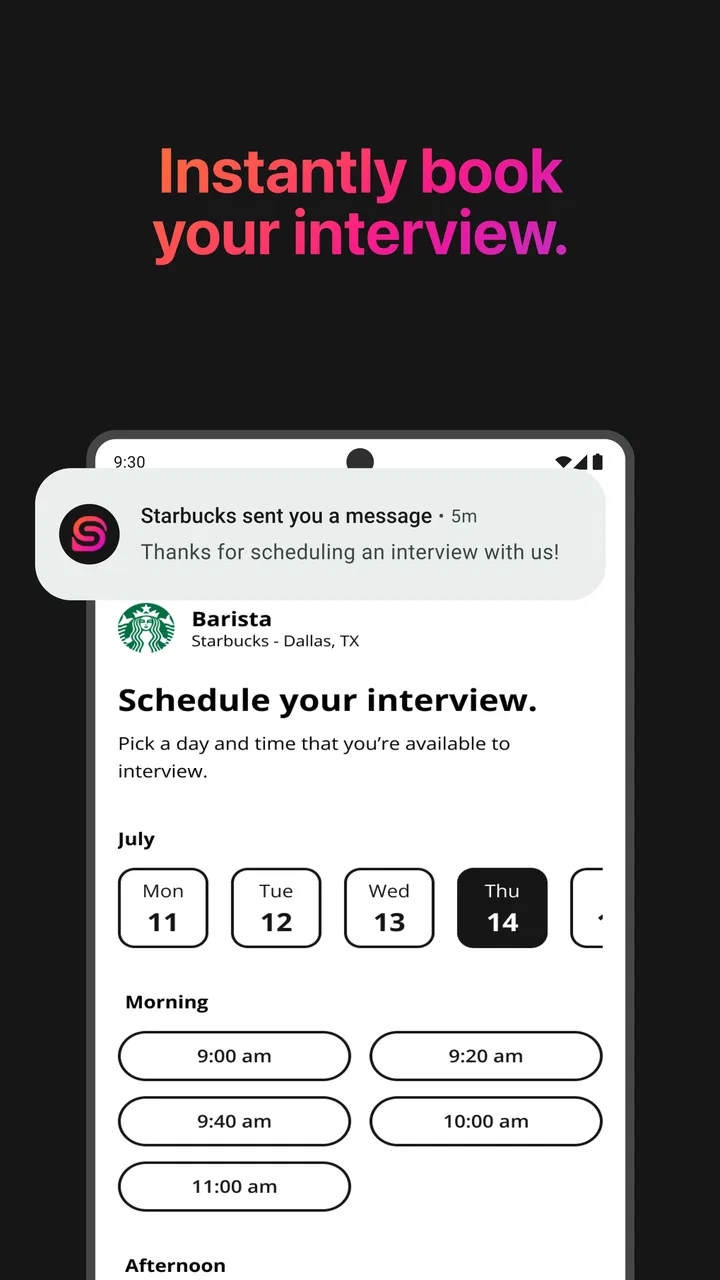
Notifications can also create misleading expectations. A notification is a prompt to check the app, not a guarantee that a job is still available or that an employer has made a decision. I prefer to open the relevant conversation or listing, confirm the details, and then respond with the information that matters: my experience, practical availability, and ability to reach the workplace.
When the app is not the real cause
Sometimes the apparent problem is the local market rather than the software. If there are few suitable jobs nearby, no app can manufacture a healthy selection of employers. In that situation, a general job board, local business websites, direct contact with venues, or a recommendation from someone already working in the area may produce better results alongside Seasoned.
The same applies to slow responses. Hiring in service businesses can be affected by changing schedules, busy periods, staffing decisions, and managers who are not checking applications constantly. A delayed reply is disappointing, but it is not automatically evidence that the app failed. I would follow up politely when appropriate, then continue searching instead of waiting indefinitely.
There is also a difference between finding a job and deciding whether it is a good job. A focused listing can help with discovery, but I would still verify the workplace, expected duties, schedule, pay arrangements, commute, and any other important condition directly before accepting. The app should support the search, not replace ordinary judgment.
For younger users, the Teen content rating is worth noticing. That rating does not remove the need to consider workplace age requirements or local employment rules. Anyone under the legal age for a particular role should confirm eligibility with the employer and follow the rules that apply where they live. The rating describes the app’s audience classification, not permission to take every job shown.
Who will get the most from it
I think Seasoned is most useful for people who already want service-industry work and need a more relevant place to look. It can suit a server, bartender, host, kitchen worker, hotel employee, or someone moving between hospitality roles who wants opportunities shaped around that environment rather than a generic employment category.
It may also help someone returning to service work after a break. A focused community can make it easier to think in terms of practical experience and workplace preferences instead of trying to translate hospitality skills into corporate language. The key is to present that experience clearly and realistically.
People with flexible schedules may benefit as well, particularly when they can consider several nearby types of venue. Flexibility should not mean saying yes to every possible shift. It is more useful to identify the hours and travel distance that are genuinely manageable, then search with those limits in mind.
Who should choose another route
I would not make this my only option if I were searching for work outside the service industry. Its specialization is the reason to use it, so someone looking for engineering, administration, retail management, or highly formal professional roles may receive better results from a broader platform.
I would also be cautious if I lived in an area with very little hospitality activity or if I needed a job immediately with a guaranteed response. A general board, local employment office, direct applications, and personal contacts may provide wider coverage. Seasoned works best as a targeted channel, not as a promise that every area will have the same level of activity.
Users who dislike maintaining a profile or communicating about their availability may find the focused approach less convenient than a simple list of vacancies. The app’s community angle is valuable only if I am willing to explain what I can do and engage with opportunities thoughtfully.
How it compares with familiar alternatives
Compared with a broad job board, Seasoned feels more specific and potentially less noisy for hospitality searches. A general platform usually wins on range, especially when I want to compare unrelated industries or search across a large geographic area. Seasoned wins when the service sector is my main target and local relevance matters more than maximum volume.
Compared with applying directly on a restaurant or hotel website, the app can provide a more centralized starting point. Direct applications may still be better when I already know the exact venue I want, particularly if that employer manages all hiring through its own process. I see the two methods as complementary rather than mutually exclusive.
Compared with asking friends or former coworkers, the app offers a more structured way to discover possibilities beyond my existing network. Personal recommendations can carry more trust, but they are limited by who I know. A local service community can widen the search while still keeping it connected to the kind of work I understand.
The important trade-off is not simply “specialized versus general.” It is relevance versus coverage. I would use Seasoned to find focused opportunities, then use wider sources to make sure I am not overlooking employers or roles that do not appear in the same place.
What the numbers suggest, and what they do not
The app has an average rating of 4.2 from around 3.8 thousand ratings, with roughly 1.1 thousand written reviews. It has passed one million installs, which tells me it has reached a substantial audience rather than being an obscure experiment. Those figures are encouraging, but they should not be read as a guarantee that my own city will have equally strong activity.
The rating is best treated as a broad signal that many users find the app worthwhile, not as a prediction of every individual search. Employment apps are unusually dependent on location, timing, profile quality, and employer participation. A positive overall impression can coexist with a disappointing experience in a quiet area.
My practical verdict
Seasoned Service Industry Jobs is a sensible free tool for a specific person: someone who wants service-industry work and would rather search within a relevant local community than sift through a huge general database. I like its focused purpose, and I think it can make the early stage of a hospitality job search more organized.
My recommendation is to approach it as one part of a disciplined search. Confirm the operating system, update to the current version, review the location, complete the profile carefully, and judge the local results before investing too much time. If the app seems quiet, test the search settings and compare other channels before blaming the software.
The main limitation is also the main design choice: specialization cannot guarantee coverage everywhere. For a busy service market, that focus may save time. For a small market or a non-hospitality search, a general platform may be the better first choice. Used with realistic expectations, Seasoned can be a useful, practical addition to the job hunt rather than a replacement for every other route.
Overall, I would recommend trying it to a friend who is actively looking for restaurant or hospitality work, especially if they are prepared to keep their profile clear and follow up thoughtfully. The best results come from treating the app as a local connection tool, not a passive list of vacancies. That mindset makes its strengths easier to notice and its limitations much easier to manage.
Developed by Seasoned, the app is free and carries a Teen content rating. It was released on January 17, 2019, and its current version is 2.28.0. Those details make it easy to identify in the app marketplace, while the real decision remains personal: whether the service opportunities around you justify adding this focused community to your search.
FAQs for Seasoned Service Industry Jobs
01What is the main purpose of the Seasoned Service Industry Jobs app?
The Seasoned Service Industry Jobs app is designed to connect job seekers with employers in the hospitality and service sectors. It offers a platform where users can browse job listings, create profiles showcasing their skills, and apply for positions directly through the app, streamlining the job search process.
02Is the Seasoned app free to use?
Yes, the Seasoned Service Industry Jobs app is free for job seekers. Users can download the app, create a profile, and browse job listings without any cost. However, employers looking to post job listings may be subject to fees for enhanced visibility or premium features.
03How does the app ensure the quality of job listings?
The app maintains quality by partnering with reputable employers and implementing a verification process for job listings. This ensures that the positions advertised are legitimate and accurately described, providing job seekers with trustworthy opportunities within the service industry.
04Can I apply to jobs directly through the app?
Absolutely! Once you’ve set up your profile, you can apply to jobs directly within the app. The platform allows you to submit applications seamlessly, track the status of your applications, and communicate with potential employers, making the job application process more efficient.
05What makes Seasoned different from other job search apps?
Seasoned focuses specifically on the service industry, offering tailored features for this sector. It includes tools for building a specialized profile, networking with industry professionals, and accessing resources specific to hospitality jobs, setting it apart from more generalized job search platforms.
Pros
- Easy-to-use interface for job seekers.
- Wide range of job types available.
- Real-time notifications for new jobs.
- Built-in chat for direct employer contact.
- Personalized job recommendations.
Cons
- Limited to service industry jobs only.
- Some job listings lack full details.
- Occasional app performance lags.
- Notifications can be overwhelming.
- Requires frequent updates for fixes.

Seasoned Service Industry Jobs
Gallery